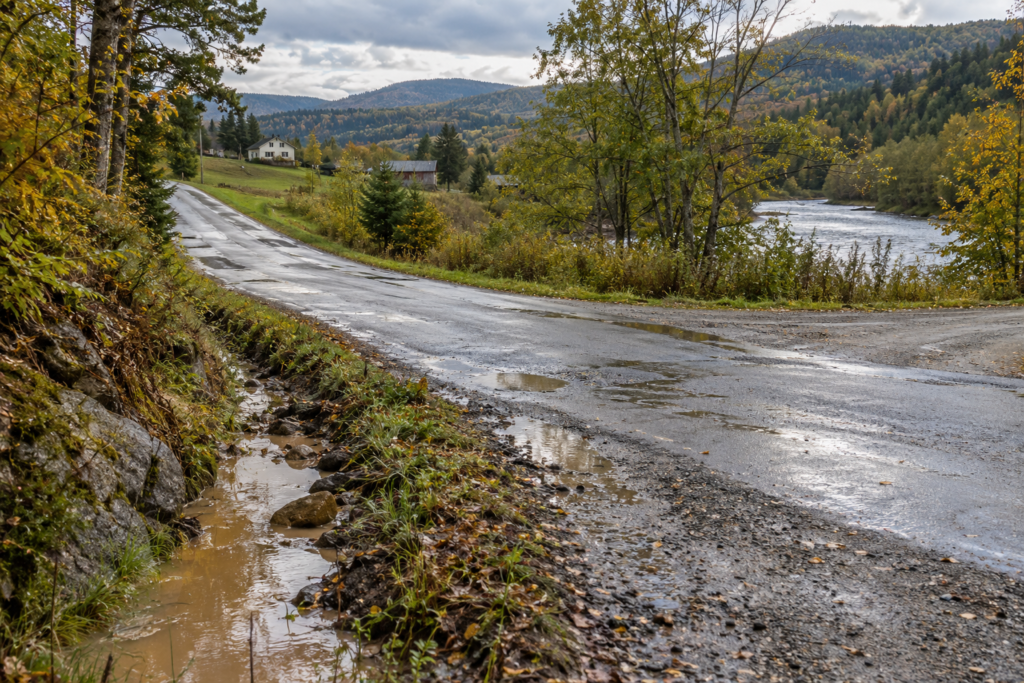
Heavy rain has brought a shared question into view for Alder Valley and Northbank: how can one neighbourhood deal with water without moving the problem to another? In this fictional scenario, muddy runoff appears at a valley road junction and water stands on the walking route near Northbank Field. These observations do not establish a common cause, pollution or responsibility for damage.
Some residents favour a prompt assessment of local drainage and practical measures where journeys are interrupted. Others want riverside vegetation and possible restoration considered alongside an investigation upstream. A ditch might shift water elsewhere; planting would need suitable land, maintenance and evidence of what it could achieve. Neither approach has been selected.
Rose Martin, a part-time care worker who grows vegetables in Alder Valley, wants the floodplain protected. She also needs a road that does not close every autumn. Protecting land and maintaining everyday access are both part of her concern; a simple choice between nature and travel would miss that tension.
George Pike, a retired mechanic who lives with his spouse, favours practical flood protection over another round of plans and studies. His impatience with delay differs from the wish to investigate further, but it does not identify a responsible party or prove which measure would work.
Peter MacNeil, an accountant, supports phased spending on flood resilience so small businesses can plan ahead. He would want options to explain future maintenance and who might bear costs. Phasing expenditure is his perspective, not an agreed budget or a promise of funding.
Noelle Tremblay, a secondary school teacher, wants young people included in decisions about travel, schools and shared spaces. Grace Morrison, a registered nurse, asks that health access and transport be considered together for older neighbours. Their concerns widen the discussion beyond a road repair, without making either resident a project official.
Downstream, Ruth Miller brings experience of daily walking along Northbank Field's public path. Mara Bennett, the U17 coach, and Leo Garcia, the teenage captain, can contribute different perspectives on wet conditions, training and journeys home. Aisha Coleman brings her established youth responsibility in the club. These are possible contributions to a discussion, not new duties or decisions about the field.
Lumina City Parks & Recreation retains its established responsibility at Northbank Field. That does not make it responsible for the river or the entire catchment. The existing Northbank Field Shared Use Plan remains a separate proposal; this story changes no training times, lighting or event arrangements.
Bracken Highlands provides upstream landscape context, not a finding against forestry. People who depend on forest work need their livelihoods considered, and any explanation of water movement would need evidence. Forestry in Bracken has not been established as the cause of the conditions described here.
Nora Bell could suggest an open discussion and offer voluntary help. Samira Vale could explore whether the cooperative has capacity for practical work. Neither has been appointed to lead this proposal, and no volunteer capacity, site visit or work party is guaranteed. Access and permissions would have to be checked before any visit or work.
The proposed Alder Valley–Northbank River Response Review would bring the two locations into one evidence-gathering discussion. It would ask where and when water collects, which owners and decision-makers need to be involved, and how local measures compare with vegetation, restoration and upstream investigation. There is no chosen scheme, funding, timetable or new right to use land.
These are individual perspectives in a fictional local story, not formal statements or an agreed community position. Fictional demonstration news: no real flood warning, engineering assessment or notice of works is being issued.
Explore Alder Valley, Northbank and Bracken Highlands, and read the shared river review proposal.